Serous Retinal Detachment - Cuticular Drusen (Basal Laminar Drusen) Possible Wet AMD
|
|
66-year-old man was seen in the office on February 13, 2012. He was diagnosed with macular degeneration in Michigan about eight years ago. He took PreserVision religiously only missing a few days and then he was in for an evaluation, because of decreased vision in both eyes. He felt it might be his cataracts. That was the first time he was seen in your practice. It was noted at the time that he had subretinal fluid in the macula of both eyes and he was started on Avastin treatment.
He has been having Avastin treatments every six weeks and then monthly. He reports that over the last year he has had a total of twelve treatments in both eyes. He has them about one day apart. His most recent injection was about a month ago. He is due for one now, but you suggested he come here for an evaluation. I appreciate your note, which was helpful and it sounds like the case has been vexing and the subretinal fluid has not absorbed, despite therapy. His blood pressure has been normal as far as he knows. He does take hydrochlorothiazide, because of his history of kidney stones. He has no eye pain nor is he taking any steroid by any route. He has not had any episodes of vision loss in the past in either eye.
VISUAL ACUITY: OD 20/160, Pinhole 20/80. OS 20/63, Pinhole 20/50. IOP: 11 OU.
SLIT EXAMINATION: There is 2+ nuclear sclerosis in both eyes.
EXTENDED OPHTHALMOSCOPY:
OD: Vertical C/D ratio is 0.2. There is a posterior vitreous separation. There are pigment epithelial irregularities in the macula with patchy drusen.
OS: Vertical C/D ratio is 0.2. There is a posterior vitreous separation. There are pigment epithelial irregularities in the macula with patchy drusen.
SPECTRALIS-SD-OCT SCAN: The OCT scan in the right eye shows a serous macular detachment centrally. There are excrescences on the outer retinal surface and there are macular drusen present, predominately on the temporal edge of the fovea. The choroidal thickness in the center of the fovea is only 155 microns. In the left eye the OCT scan similarly shows a serous macular detachment. There are excrescences on the outer retinal surface. The choroidal thickness is 224 microns centrally, which is normal. Neither scan shows any sort of pigment epithelium thickening centrally. There is no pigment epithelial detachment in the center of the macula nor are there any significant organized pigment epithelial detachments inferior or superior to the center of the macula in either eye. There are however, saw-toothed drusen, predominately at the temporal edge of the macula in both eyes.
FUNDUS AUTO FLUORESCENCE: The auto fluorescence image shows some hyper auto fluorescence at the edge of the macula corresponding to the macular drusen. There does not appear to be any reticular pseudo drusen in either eye. There is predominately hypo auto fluorescence centrally, which would be consistent with the macular pigment being normal.
FLUORESCEIN ANGIOGRAPHY: Fluorescein angiography shows very early hyperfluorescence from reticular drusen scattered around the periphery of the macula with confluent hyperfluorescence centrally, except for the very center of the fovea where there is hypofluorescence again consistent with the macular pigment. The fluorescein angiogram of the left eye similarly shows very early hyperfluorescence from reticular/basal laminar drusen scattered throughout the periphery of the macula. There is no evidence of any leakage in the center of the fovea in the fluorescein angiogram in either eye nor is there any appearance of any guttering or pigment epithelial atrophy, which one would expect with chronic central serous retinopathy.
INDOCYANINE GREEN ANGIOGRAPHY: The indocyanine green angiogram shows in the right eye some hypofluorescence centrally. There is definitely no evidence of any polypoidal choroidal vasculopathy nor is there any excessive leakage from the choriocapillaris and the wide angle late indocyanine green shots taken at fifteen minutes. There is some hypofluorescence centrally corresponding to the areas of confluent macular drusen. In the left eye similarly, the indocyanine green angiogram shows some hypofluorescence centrally with some early staining of the drusen and again in the late frames there is some staining of drusen and then there is hypofluorescence in the center of the indocyanine green angiogram as you would see where there is an area of confluent macular drusen and again there is no evidence of any hyperfluorescence from the choriocapillaris as you would expect in someone with central serous retinopathy.
IMPRESSION:
1. CATARACTS – BOTH EYES
2. CHRONIC SUBRETINAL FLUID – BOTH EYES
3. CUTICULAR / BASAL LAMINAR DRUSEN – BOTH EYES
4. PREVIOUS AVASTIN TREATMENTS – BOTH EYES
5. NO EVIDENCE WITH EITHER ENHANCED DEPTH IMAGING OCT OR WITH INDOCYANINE GREEN ANGIOGRAM OF CENTRAL SEROUS RETINOPATHY
6. HYPERTENSION
DISCUSSION: I explained to the patient the chronic subretinal fluid in his eye is atypical and possibly because of recalcitrant wet age-related macular degeneration. It is also possibly he may have a variant of cuticular drusen, which does sometimes cause chronic subfoveal fluid and it may be unresponsive to anti VEGF therapy, because it is not associated with neovascularization. I suggest he see you back regularly. I don’t think it is unreasonable to try and switch to Eylea to see if he responds to that over a few treatments. I think it is possible that he may not and if this is subretinal fluid associated with cuticular drusen, the etiology is such that the subretinal fluid may not be responsive to other treatments.
I checked his blood pressure three times. His blood pressure was a little high at 160/90, but not high enough to cause serous retinal detachment. I suggested he talk to his medical doctor about possibly lowering his blood pressure though.
Given that his vision was better three or four years ago and that cuticular drusen generally causes chronic subretinal fluid, I think it wouldn’t be unreasonable to remove his cataracts, which I suspect would substantially improve his visual function.
I would not recommend photodynamic laser in him. Firstly I don’t see any evidence of any leaky choriocapillaris lesions which you would expect to respond to photodynamic laser. In addition, my personal experience of photodynamic laser has been negative even with patients with leaky choriocapillaris, whom I have treated with photodynamic laser tend to have significant vision drop, some of which don’t recover. I will ask him to see you back in the next few weeks. I told him he does not need to return here unless you or he note further problems.
|
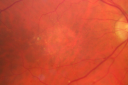
Cuticular Drusen (Basal Laminar Drusen) and Bilateral Chronic Subfoveal Fluid (Serous Retinal Detachment) unresponsive to monthly Avastin vista 929 veces66-year-old man with bilateral subfoveal fluid unresponsive to one year of monthly avastin therapy.
OD 20/160, Pinhole 20/80. OS 20/63, Pinhole 20/50. OCT scan shows subretinal fluid with normal choroidal thickness. Fluorescein angiogram shows cuticular/basal laminar drusen. ICG shows no foci of choriocapillaris leakage.

(0 votos)
|
|

Cuticular Drusen (Basal Laminar Drusen) and Bilateral Chronic Subfoveal Fluid (Serous Retinal Detachment) unresponsive to monthly Avastin vista 702 veces66-year-old man with bilateral subfoveal fluid unresponsive to one year of monthly avastin therapy.
OD 20/160, Pinhole 20/80. OS 20/63, Pinhole 20/50. OCT scan shows subretinal fluid with normal choroidal thickness. Fluorescein angiogram shows cuticular/basal laminar drusen. ICG shows no foci of choriocapillaris leakage.
(0 votos)
|
|

Cuticular Drusen (Basal Laminar Drusen) and Bilateral Chronic Subfoveal Fluid (Serous Retinal Detachment) unresponsive to monthly Avastin vista 743 veces66-year-old man with bilateral subfoveal fluid unresponsive to one year of monthly avastin therapy.
OD 20/160, Pinhole 20/80. OS 20/63, Pinhole 20/50. OCT scan shows subretinal fluid with normal choroidal thickness. Fluorescein angiogram shows cuticular/basal laminar drusen. ICG shows no foci of choriocapillaris leakage.
(0 votos)
|
|

Cuticular Drusen (Basal Laminar Drusen) and Bilateral Chronic Subfoveal Fluid (Serous Retinal Detachment) unresponsive to monthly Avastin vista 932 veces66-year-old man with bilateral subfoveal fluid unresponsive to one year of monthly avastin therapy.
OD 20/160, Pinhole 20/80. OS 20/63, Pinhole 20/50. OCT scan shows subretinal fluid with normal choroidal thickness. Fluorescein angiogram shows cuticular/basal laminar drusen. ICG shows no foci of choriocapillaris leakage.
(0 votos)
|
|

Cuticular Drusen (Basal Laminar Drusen) and Bilateral Chronic Subfoveal Fluid (Serous Retinal Detachment) unresponsive to monthly Avastin OCT OD EDIvista 1027 veces66-year-old man with bilateral subfoveal fluid unresponsive to one year of monthly avastin therapy.
OD 20/160, Pinhole 20/80. OS 20/63, Pinhole 20/50. OCT scan shows subretinal fluid with normal choroidal thickness. Fluorescein angiogram shows cuticular/basal laminar drusen. ICG shows no foci of choriocapillaris leakage.
(0 votos)
|
|

Cuticular Drusen (Basal Laminar Drusen) and Bilateral Chronic Subfoveal Fluid (Serous Retinal Detachment) unresponsive to monthly Avastin OCT OS EDIvista 1210 veces66-year-old man with bilateral subfoveal fluid unresponsive to one year of monthly avastin therapy.
OD 20/160, Pinhole 20/80. OS 20/63, Pinhole 20/50. OCT scan shows subretinal fluid with normal choroidal thickness. Fluorescein angiogram shows cuticular/basal laminar drusen. ICG shows no foci of choriocapillaris leakage.
(0 votos)
|
|
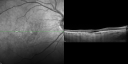
Cuticular Drusen (Basal Laminar Drusen) and Bilateral Chronic Subfoveal Fluid (Serous Retinal Detachment) unresponsive to monthly Avastin OCT ODvista 903 veces66-year-old man with bilateral subfoveal fluid unresponsive to one year of monthly avastin therapy.
OD 20/160, Pinhole 20/80. OS 20/63, Pinhole 20/50. OCT scan shows subretinal fluid with normal choroidal thickness. Fluorescein angiogram shows cuticular/basal laminar drusen. ICG shows no foci of choriocapillaris leakage.
(0 votos)
|
|

Cuticular Drusen (Basal Laminar Drusen) and Bilateral Chronic Subfoveal Fluid (Serous Retinal Detachment) unresponsive to monthly Avastin OCT OSvista 912 veces66-year-old man with bilateral subfoveal fluid unresponsive to one year of monthly avastin therapy.
OD 20/160, Pinhole 20/80. OS 20/63, Pinhole 20/50. OCT scan shows subretinal fluid with normal choroidal thickness. Fluorescein angiogram shows cuticular/basal laminar drusen. ICG shows no foci of choriocapillaris leakage.
(0 votos)
|
|

Cuticular Drusen (Basal Laminar Drusen) and Bilateral Chronic Subfoveal Fluid (Serous Retinal Detachment) unresponsive to monthly Avastin OCT OD VIDEO TAKES A LONG LONG TIME TO LOADvista 614 veces66-year-old man with bilateral subfoveal fluid unresponsive to one year of monthly avastin therapy.
OD 20/160, Pinhole 20/80. OS 20/63, Pinhole 20/50. OCT scan shows subretinal fluid with normal choroidal thickness. Fluorescein angiogram shows cuticular/basal laminar drusen. ICG shows no foci of choriocapillaris leakage.
(0 votos)
|
|

Cuticular Drusen (Basal Laminar Drusen) and Bilateral Chronic Subfoveal Fluid (Serous Retinal Detachment) unresponsive to monthly Avastin OCT OS VIDEO TAKES A LONG LONG TIME TO LOADvista 614 veces66-year-old man with bilateral subfoveal fluid unresponsive to one year of monthly avastin therapy.
OD 20/160, Pinhole 20/80. OS 20/63, Pinhole 20/50. OCT scan shows subretinal fluid with normal choroidal thickness. Fluorescein angiogram shows cuticular/basal laminar drusen. ICG shows no foci of choriocapillaris leakage.
(0 votos)
|
|

Cuticular Drusen (Basal Laminar Drusen) and Bilateral Chronic Subfoveal Fluid (Serous Retinal Detachment) unresponsive to monthly Avastin Infrared ODvista 546 veces66-year-old man with bilateral subfoveal fluid unresponsive to one year of monthly avastin therapy.
OD 20/160, Pinhole 20/80. OS 20/63, Pinhole 20/50. OCT scan shows subretinal fluid with normal choroidal thickness. Fluorescein angiogram shows cuticular/basal laminar drusen. ICG shows no foci of choriocapillaris leakage.
(0 votos)
|
|

Cuticular Drusen (Basal Laminar Drusen) and Bilateral Chronic Subfoveal Fluid (Serous Retinal Detachment) unresponsive to monthly Avastin - Infrared OSvista 651 veces66-year-old man with bilateral subfoveal fluid unresponsive to one year of monthly avastin therapy.
OD 20/160, Pinhole 20/80. OS 20/63, Pinhole 20/50. OCT scan shows subretinal fluid with normal choroidal thickness. Fluorescein angiogram shows cuticular/basal laminar drusen. ICG shows no foci of choriocapillaris leakage.
(0 votos)
|
|

Cuticular Drusen (Basal Laminar Drusen) and Bilateral Chronic Subfoveal Fluid (Serous Retinal Detachment) unresponsive to monthly Avastin - Fundus Autofluorescence ODvista 873 veces66-year-old man with bilateral subfoveal fluid unresponsive to one year of monthly avastin therapy.
OD 20/160, Pinhole 20/80. OS 20/63, Pinhole 20/50. OCT scan shows subretinal fluid with normal choroidal thickness. Fluorescein angiogram shows cuticular/basal laminar drusen. ICG shows no foci of choriocapillaris leakage.
(0 votos)
|
|

Cuticular Drusen (Basal Laminar Drusen) and Bilateral Chronic Subfoveal Fluid (Serous Retinal Detachment) unresponsive to monthly Avastin - Fundus Autofluorescence OSvista 620 veces66-year-old man with bilateral subfoveal fluid unresponsive to one year of monthly avastin therapy.
OD 20/160, Pinhole 20/80. OS 20/63, Pinhole 20/50. OCT scan shows subretinal fluid with normal choroidal thickness. Fluorescein angiogram shows cuticular/basal laminar drusen. ICG shows no foci of choriocapillaris leakage.
(0 votos)
|
|

Cuticular Drusen (Basal Laminar Drusen) and Bilateral Chronic Subfoveal Fluid (Serous Retinal Detachment) unresponsive to monthly Avastin - Fill ICG FA ODvista 586 veces66-year-old man with bilateral subfoveal fluid unresponsive to one year of monthly avastin therapy.
OD 20/160, Pinhole 20/80. OS 20/63, Pinhole 20/50. OCT scan shows subretinal fluid with normal choroidal thickness. Fluorescein angiogram shows cuticular/basal laminar drusen. ICG shows no foci of choriocapillaris leakage.
(0 votos)
|
|

Cuticular Drusen (Basal Laminar Drusen) and Bilateral Chronic Subfoveal Fluid (Serous Retinal Detachment) unresponsive to monthly Avastin - Fill ICG FA ODvista 508 veces66-year-old man with bilateral subfoveal fluid unresponsive to one year of monthly avastin therapy.
OD 20/160, Pinhole 20/80. OS 20/63, Pinhole 20/50. OCT scan shows subretinal fluid with normal choroidal thickness. Fluorescein angiogram shows cuticular/basal laminar drusen. ICG shows no foci of choriocapillaris leakage.
(0 votos)
|
|

Cuticular Drusen (Basal Laminar Drusen) and Bilateral Chronic Subfoveal Fluid (Serous Retinal Detachment) unresponsive to monthly Avastin - Fill ICG FA ODvista 489 veces66-year-old man with bilateral subfoveal fluid unresponsive to one year of monthly avastin therapy.
OD 20/160, Pinhole 20/80. OS 20/63, Pinhole 20/50. OCT scan shows subretinal fluid with normal choroidal thickness. Fluorescein angiogram shows cuticular/basal laminar drusen. ICG shows no foci of choriocapillaris leakage.
(0 votos)
|
|

Cuticular Drusen (Basal Laminar Drusen) and Bilateral Chronic Subfoveal Fluid (Serous Retinal Detachment) unresponsive to monthly Avastin - Fill ICG FA ODvista 516 veces66-year-old man with bilateral subfoveal fluid unresponsive to one year of monthly avastin therapy.
OD 20/160, Pinhole 20/80. OS 20/63, Pinhole 20/50. OCT scan shows subretinal fluid with normal choroidal thickness. Fluorescein angiogram shows cuticular/basal laminar drusen. ICG shows no foci of choriocapillaris leakage.
(0 votos)
|
|

Cuticular Drusen (Basal Laminar Drusen) and Bilateral Chronic Subfoveal Fluid (Serous Retinal Detachment) unresponsive to monthly Avastin - Fill ICG FA ODvista 459 veces66-year-old man with bilateral subfoveal fluid unresponsive to one year of monthly avastin therapy.
OD 20/160, Pinhole 20/80. OS 20/63, Pinhole 20/50. OCT scan shows subretinal fluid with normal choroidal thickness. Fluorescein angiogram shows cuticular/basal laminar drusen. ICG shows no foci of choriocapillaris leakage.
(0 votos)
|
|

Cuticular Drusen (Basal Laminar Drusen) and Bilateral Chronic Subfoveal Fluid (Serous Retinal Detachment) unresponsive to monthly Avastin - Fill ICG FA ODvista 525 veces66-year-old man with bilateral subfoveal fluid unresponsive to one year of monthly avastin therapy.
OD 20/160, Pinhole 20/80. OS 20/63, Pinhole 20/50. OCT scan shows subretinal fluid with normal choroidal thickness. Fluorescein angiogram shows cuticular/basal laminar drusen. ICG shows no foci of choriocapillaris leakage.
(0 votos)
|
|

Cuticular Drusen (Basal Laminar Drusen) and Bilateral Chronic Subfoveal Fluid (Serous Retinal Detachment) unresponsive to monthly Avastin Early FA ODvista 524 veces66-year-old man with bilateral subfoveal fluid unresponsive to one year of monthly avastin therapy.
OD 20/160, Pinhole 20/80. OS 20/63, Pinhole 20/50. OCT scan shows subretinal fluid with normal choroidal thickness. Fluorescein angiogram shows cuticular/basal laminar drusen. ICG shows no foci of choriocapillaris leakage.
(0 votos)
|
|

Cuticular Drusen (Basal Laminar Drusen) and Bilateral Chronic Subfoveal Fluid (Serous Retinal Detachment) unresponsive to monthly Avastin Very Early ICG ODvista 551 veces66-year-old man with bilateral subfoveal fluid unresponsive to one year of monthly avastin therapy.
OD 20/160, Pinhole 20/80. OS 20/63, Pinhole 20/50. OCT scan shows subretinal fluid with normal choroidal thickness. Fluorescein angiogram shows cuticular/basal laminar drusen. ICG shows no foci of choriocapillaris leakage.
(0 votos)
|
|

Cuticular Drusen (Basal Laminar Drusen) and Bilateral Chronic Subfoveal Fluid (Serous Retinal Detachment) unresponsive to monthly Avastin Early FA ODvista 564 veces66-year-old man with bilateral subfoveal fluid unresponsive to one year of monthly avastin therapy.
OD 20/160, Pinhole 20/80. OS 20/63, Pinhole 20/50. OCT scan shows subretinal fluid with normal choroidal thickness. Fluorescein angiogram shows cuticular/basal laminar drusen. ICG shows no foci of choriocapillaris leakage.
(0 votos)
|
|

Cuticular Drusen (Basal Laminar Drusen) and Bilateral Chronic Subfoveal Fluid (Serous Retinal Detachment) unresponsive to monthly Avastin Very Early ICG ODvista 495 veces66-year-old man with bilateral subfoveal fluid unresponsive to one year of monthly avastin therapy.
OD 20/160, Pinhole 20/80. OS 20/63, Pinhole 20/50. OCT scan shows subretinal fluid with normal choroidal thickness. Fluorescein angiogram shows cuticular/basal laminar drusen. ICG shows no foci of choriocapillaris leakage.
(0 votos)
|
|

Cuticular Drusen (Basal Laminar Drusen) and Bilateral Chronic Subfoveal Fluid (Serous Retinal Detachment) unresponsive to monthly Avastin Early FA ODvista 667 veces66-year-old man with bilateral subfoveal fluid unresponsive to one year of monthly avastin therapy.
OD 20/160, Pinhole 20/80. OS 20/63, Pinhole 20/50. OCT scan shows subretinal fluid with normal choroidal thickness. Fluorescein angiogram shows cuticular/basal laminar drusen. ICG shows no foci of choriocapillaris leakage.
(0 votos)
|
|

Cuticular Drusen (Basal Laminar Drusen) and Bilateral Chronic Subfoveal Fluid (Serous Retinal Detachment) unresponsive to monthly Avastin Early ICG ODvista 590 veces66-year-old man with bilateral subfoveal fluid unresponsive to one year of monthly avastin therapy.
OD 20/160, Pinhole 20/80. OS 20/63, Pinhole 20/50. OCT scan shows subretinal fluid with normal choroidal thickness. Fluorescein angiogram shows cuticular/basal laminar drusen. ICG shows no foci of choriocapillaris leakage.
(0 votos)
|
|

Cuticular Drusen (Basal Laminar Drusen) and Bilateral Chronic Subfoveal Fluid (Serous Retinal Detachment) unresponsive to monthly Avastin Late FA ODvista 618 veces66-year-old man with bilateral subfoveal fluid unresponsive to one year of monthly avastin therapy.
OD 20/160, Pinhole 20/80. OS 20/63, Pinhole 20/50. OCT scan shows subretinal fluid with normal choroidal thickness. Fluorescein angiogram shows cuticular/basal laminar drusen. ICG shows no foci of choriocapillaris leakage.
(0 votos)
|
|

Cuticular Drusen (Basal Laminar Drusen) and Bilateral Chronic Subfoveal Fluid (Serous Retinal Detachment) unresponsive to monthly Avastin 5 minute ICG ODvista 616 veces66-year-old man with bilateral subfoveal fluid unresponsive to one year of monthly avastin therapy.
OD 20/160, Pinhole 20/80. OS 20/63, Pinhole 20/50. OCT scan shows subretinal fluid with normal choroidal thickness. Fluorescein angiogram shows cuticular/basal laminar drusen. ICG shows no foci of choriocapillaris leakage.
(0 votos)
|
|

Cuticular Drusen (Basal Laminar Drusen) and Bilateral Chronic Subfoveal Fluid (Serous Retinal Detachment) unresponsive to monthly Avastin 15 Minute ICG ODvista 540 veces66-year-old man with bilateral subfoveal fluid unresponsive to one year of monthly avastin therapy.
OD 20/160, Pinhole 20/80. OS 20/63, Pinhole 20/50. OCT scan shows subretinal fluid with normal choroidal thickness. Fluorescein angiogram shows cuticular/basal laminar drusen. ICG shows no foci of choriocapillaris leakage.
(0 votos)
|
|

Cuticular Drusen (Basal Laminar Drusen) and Bilateral Chronic Subfoveal Fluid (Serous Retinal Detachment) unresponsive to monthly Avastin Early FA OSvista 616 veces66-year-old man with bilateral subfoveal fluid unresponsive to one year of monthly avastin therapy.
OD 20/160, Pinhole 20/80. OS 20/63, Pinhole 20/50. OCT scan shows subretinal fluid with normal choroidal thickness. Fluorescein angiogram shows cuticular/basal laminar drusen. ICG shows no foci of choriocapillaris leakage.
(0 votos)
|
|

Cuticular Drusen (Basal Laminar Drusen) and Bilateral Chronic Subfoveal Fluid (Serous Retinal Detachment) unresponsive to monthly Avastin ICG OSvista 446 veces66-year-old man with bilateral subfoveal fluid unresponsive to one year of monthly avastin therapy.
OD 20/160, Pinhole 20/80. OS 20/63, Pinhole 20/50. OCT scan shows subretinal fluid with normal choroidal thickness. Fluorescein angiogram shows cuticular/basal laminar drusen. ICG shows no foci of choriocapillaris leakage.
(0 votos)
|
|

Cuticular Drusen (Basal Laminar Drusen) and Bilateral Chronic Subfoveal Fluid (Serous Retinal Detachment) unresponsive to monthly Avastin FA OSvista 447 veces66-year-old man with bilateral subfoveal fluid unresponsive to one year of monthly avastin therapy.
OD 20/160, Pinhole 20/80. OS 20/63, Pinhole 20/50. OCT scan shows subretinal fluid with normal choroidal thickness. Fluorescein angiogram shows cuticular/basal laminar drusen. ICG shows no foci of choriocapillaris leakage.
(0 votos)
|
|

Cuticular Drusen (Basal Laminar Drusen) and Bilateral Chronic Subfoveal Fluid (Serous Retinal Detachment) unresponsive to monthly Avastin Very Early ICG OSvista 456 veces66-year-old man with bilateral subfoveal fluid unresponsive to one year of monthly avastin therapy.
OD 20/160, Pinhole 20/80. OS 20/63, Pinhole 20/50. OCT scan shows subretinal fluid with normal choroidal thickness. Fluorescein angiogram shows cuticular/basal laminar drusen. ICG shows no foci of choriocapillaris leakage.
(0 votos)
|
|

Cuticular Drusen (Basal Laminar Drusen) and Bilateral Chronic Subfoveal Fluid (Serous Retinal Detachment) unresponsive to monthly Avastin FA OSvista 515 veces66-year-old man with bilateral subfoveal fluid unresponsive to one year of monthly avastin therapy.
OD 20/160, Pinhole 20/80. OS 20/63, Pinhole 20/50. OCT scan shows subretinal fluid with normal choroidal thickness. Fluorescein angiogram shows cuticular/basal laminar drusen. ICG shows no foci of choriocapillaris leakage.
(0 votos)
|
|

Cuticular Drusen (Basal Laminar Drusen) and Bilateral Chronic Subfoveal Fluid (Serous Retinal Detachment) unresponsive to monthly Avastin - Early ICG OSvista 534 veces66-year-old man with bilateral subfoveal fluid unresponsive to one year of monthly avastin therapy.
OD 20/160, Pinhole 20/80. OS 20/63, Pinhole 20/50. OCT scan shows subretinal fluid with normal choroidal thickness. Fluorescein angiogram shows cuticular/basal laminar drusen. ICG shows no foci of choriocapillaris leakage.
(0 votos)
|
|

Cuticular Drusen (Basal Laminar Drusen) and Bilateral Chronic Subfoveal Fluid (Serous Retinal Detachment) unresponsive to monthly Avastin - Late FA OSvista 678 veces66-year-old man with bilateral subfoveal fluid unresponsive to one year of monthly avastin therapy.
OD 20/160, Pinhole 20/80. OS 20/63, Pinhole 20/50. OCT scan shows subretinal fluid with normal choroidal thickness. Fluorescein angiogram shows cuticular/basal laminar drusen. ICG shows no foci of choriocapillaris leakage.
(0 votos)
|
|

Cuticular Drusen (Basal Laminar Drusen) and Bilateral Chronic Subfoveal Fluid (Serous Retinal Detachment) unresponsive to monthly Avastin - ICG OSvista 673 veces66-year-old man with bilateral subfoveal fluid unresponsive to one year of monthly avastin therapy.
OD 20/160, Pinhole 20/80. OS 20/63, Pinhole 20/50. OCT scan shows subretinal fluid with normal choroidal thickness. Fluorescein angiogram shows cuticular/basal laminar drusen. ICG shows no foci of choriocapillaris leakage.
(0 votos)
|
|

Cuticular Drusen (Basal Laminar Drusen) and Bilateral Chronic Subfoveal Fluid (Serous Retinal Detachment) unresponsive to monthly Avastin - 15 minute ICG Angiogram Left Eyevista 743 veces66-year-old man with bilateral subfoveal fluid unresponsive to one year of monthly avastin therapy.
OD 20/160, Pinhole 20/80. OS 20/63, Pinhole 20/50. OCT scan shows subretinal fluid with normal choroidal thickness. Fluorescein angiogram shows cuticular/basal laminar drusen. ICG shows no foci of choriocapillaris leakage.
(0 votos)
|
|
|
|
| 38 archivos en 1 página(s) |
|
66-year-old man was seen in the office on February 13, 2012. He was diagnosed with macular degeneration in Michigan about eight years ago. He took PreserVision religiously only missing a few days and then he was in for an evaluation, because of decreased vision in both eyes. He felt it might be his cataracts. That was the first time he was seen in your practice. It was noted at the time that he had subretinal fluid in the macula of both eyes and he was started on Avastin treatment.
He has been having Avastin treatments every six weeks and then monthly. He reports that over the last year he has had a total of twelve treatments in both eyes. He has them about one day apart. His most recent injection was about a month ago. He is due for one now, but you suggested he come here for an evaluation. I appreciate your note, which was helpful and it sounds like the case has been vexing and the subretinal fluid has not absorbed, despite therapy. His blood pressure has been normal as far as he knows. He does take hydrochlorothiazide, because of his history of kidney stones. He has no eye pain nor is he taking any steroid by any route. He has not had any episodes of vision loss in the past in either eye.
VISUAL ACUITY: OD 20/160, Pinhole 20/80. OS 20/63, Pinhole 20/50. IOP: 11 OU.
SLIT EXAMINATION: There is 2+ nuclear sclerosis in both eyes.
EXTENDED OPHTHALMOSCOPY:
OD: Vertical C/D ratio is 0.2. There is a posterior vitreous separation. There are pigment epithelial irregularities in the macula with patchy drusen.
OS: Vertical C/D ratio is 0.2. There is a posterior vitreous separation. There are pigment epithelial irregularities in the macula with patchy drusen.
SPECTRALIS-SD-OCT SCAN: The OCT scan in the right eye shows a serous macular detachment centrally. There are excrescences on the outer retinal surface and there are macular drusen present, predominately on the temporal edge of the fovea. The choroidal thickness in the center of the fovea is only 155 microns. In the left eye the OCT scan similarly shows a serous macular detachment. There are excrescences on the outer retinal surface. The choroidal thickness is 224 microns centrally, which is normal. Neither scan shows any sort of pigment epithelium thickening centrally. There is no pigment epithelial detachment in the center of the macula nor are there any significant organized pigment epithelial detachments inferior or superior to the center of the macula in either eye. There are however, saw-toothed drusen, predominately at the temporal edge of the macula in both eyes.
FUNDUS AUTO FLUORESCENCE: The auto fluorescence image shows some hyper auto fluorescence at the edge of the macula corresponding to the macular drusen. There does not appear to be any reticular pseudo drusen in either eye. There is predominately hypo auto fluorescence centrally, which would be consistent with the macular pigment being normal.
FLUORESCEIN ANGIOGRAPHY: Fluorescein angiography shows very early hyperfluorescence from reticular drusen scattered around the periphery of the macula with confluent hyperfluorescence centrally, except for the very center of the fovea where there is hypofluorescence again consistent with the macular pigment. The fluorescein angiogram of the left eye similarly shows very early hyperfluorescence from reticular/basal laminar drusen scattered throughout the periphery of the macula. There is no evidence of any leakage in the center of the fovea in the fluorescein angiogram in either eye nor is there any appearance of any guttering or pigment epithelial atrophy, which one would expect with chronic central serous retinopathy.
INDOCYANINE GREEN ANGIOGRAPHY: The indocyanine green angiogram shows in the right eye some hypofluorescence centrally. There is definitely no evidence of any polypoidal choroidal vasculopathy nor is there any excessive leakage from the choriocapillaris and the wide angle late indocyanine green shots taken at fifteen minutes. There is some hypofluorescence centrally corresponding to the areas of confluent macular drusen. In the left eye similarly, the indocyanine green angiogram shows some hypofluorescence centrally with some early staining of the drusen and again in the late frames there is some staining of drusen and then there is hypofluorescence in the center of the indocyanine green angiogram as you would see where there is an area of confluent macular drusen and again there is no evidence of any hyperfluorescence from the choriocapillaris as you would expect in someone with central serous retinopathy.
IMPRESSION:
1. CATARACTS – BOTH EYES
2. CHRONIC SUBRETINAL FLUID – BOTH EYES
3. CUTICULAR / BASAL LAMINAR DRUSEN – BOTH EYES
4. PREVIOUS AVASTIN TREATMENTS – BOTH EYES
5. NO EVIDENCE WITH EITHER ENHANCED DEPTH IMAGING OCT OR WITH INDOCYANINE GREEN ANGIOGRAM OF CENTRAL SEROUS RETINOPATHY
6. HYPERTENSION
DISCUSSION: I explained to the patient the chronic subretinal fluid in his eye is atypical and possibly because of recalcitrant wet age-related macular degeneration. It is also possibly he may have a variant of cuticular drusen, which does sometimes cause chronic subfoveal fluid and it may be unresponsive to anti VEGF therapy, because it is not associated with neovascularization. I suggest he see you back regularly. I don’t think it is unreasonable to try and switch to Eylea to see if he responds to that over a few treatments. I think it is possible that he may not and if this is subretinal fluid associated with cuticular drusen, the etiology is such that the subretinal fluid may not be responsive to other treatments.
I checked his blood pressure three times. His blood pressure was a little high at 160/90, but not high enough to cause serous retinal detachment. I suggested he talk to his medical doctor about possibly lowering his blood pressure though.
Given that his vision was better three or four years ago and that cuticular drusen generally causes chronic subretinal fluid, I think it wouldn’t be unreasonable to remove his cataracts, which I suspect would substantially improve his visual function.
I would not recommend photodynamic laser in him. Firstly I don’t see any evidence of any leaky choriocapillaris lesions which you would expect to respond to photodynamic laser. In addition, my personal experience of photodynamic laser has been negative even with patients with leaky choriocapillaris, whom I have treated with photodynamic laser tend to have significant vision drop, some of which don’t recover. I will ask him to see you back in the next few weeks. I told him he does not need to return here unless you or he note further problems.


